

SEO Checklist: 7 Things to Optimize Before 2026
SEO remains an effective online marketing strategy for a variety of businesses. However, now that AI significantly impacts SEO, a successful SEO site in 2026 must have structures and content that are “easy to read” for both humans and AI. This is because Google is increasingly adapting to the era of Answer Engine Optimization (AEO).
Neglecting to update your strategy or skipping a regular SEO Site Checkup may result in your website being overshadowed by AI Overviews or having reduced credibility compared to competitors who adapt faster. Therefore, in this article, we will introduce a comprehensive SEO Checklist that entrepreneurs should prepare to ensure their websites rank effectively in the upcoming year of 2026.
Why SEO Site Checkup Important?
Search Engines like Google are increasingly integrating AI to improve performance. As a result, the system no longer considers only whether your SEO site has keywords matching the search terms; AI can now understand the “context” and “connections” of the content more deeply than ever before. Therefore, the Site Structure acts as the most critical roadmap, indicating to AI which parts of the content are main points, which are expansions, and how each page is related.
If the structure is not systematic, AI may get confused and evaluate the quality of our content lower than it actually is. Conversely, a clear structure that follows Technical SEO principles—verified through a rigorous SEO Site Checkup—will help Google trust the website’s expertise and be ready to push its ranking higher to support competition in 2026.
What is the SEO Checklist for 2026?
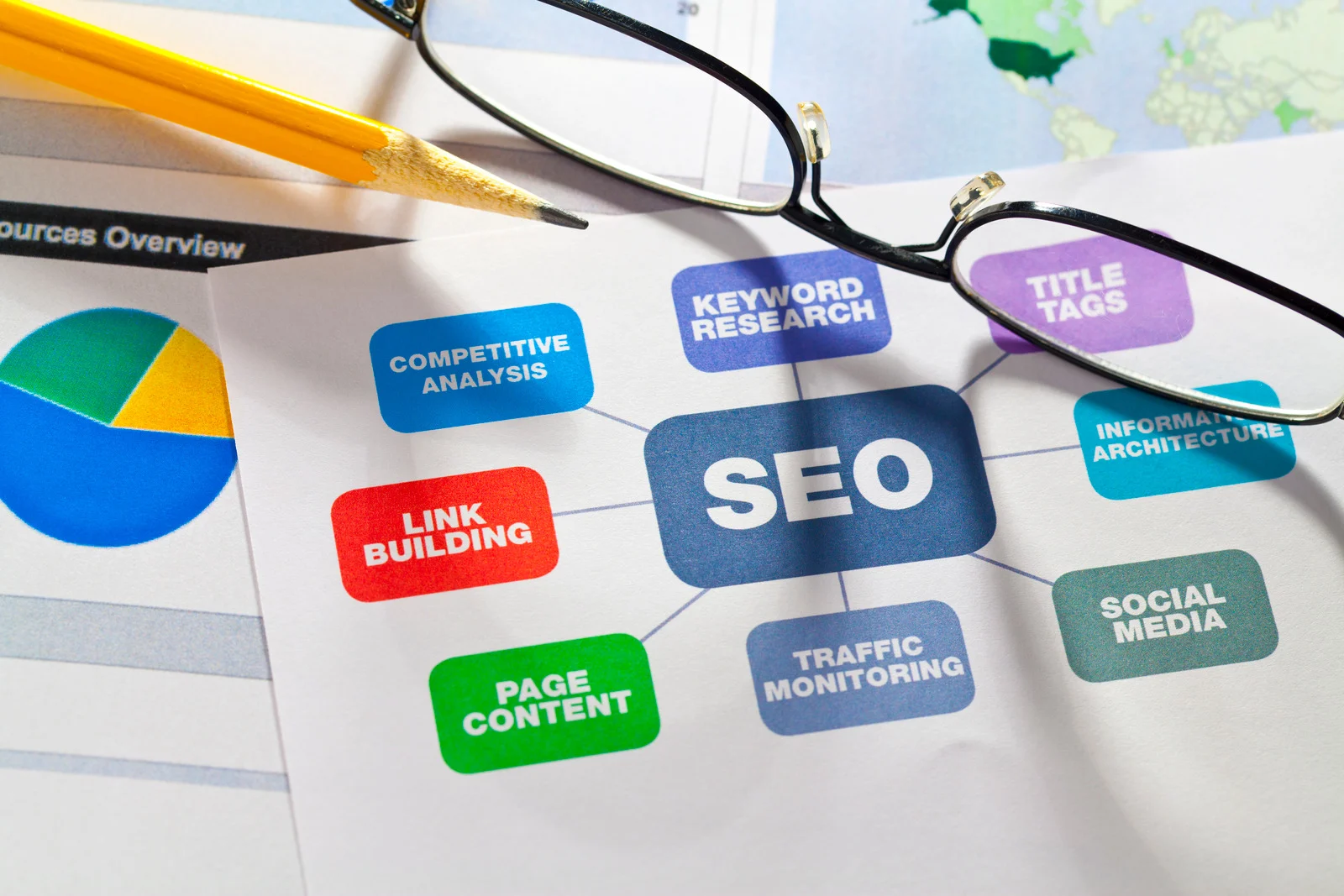
To help you prepare comprehensively and systematically, we have summarized 7 key factors for your SEO Checklist. These will be indicators of success next year, focusing on Technical Performance, Content Authority, and User Experience:
Adjust Core Web Vitals and INP (Interaction to Next Paint)
Improving Core Web Vitals is a fundamental SEO Checklist item that cannot be ignored. Specifically, focus on INP (Interaction to Next Paint), which measures the responsiveness of interactions, and LCP (Largest Contentful Paint), which measures the loading speed of the main content. The key goal is to tune these metrics to pass standards or stay in the “Green Zone” to guarantee the best user experience on your SEO site.
The main strategy for elevating Speed Performance is to audit and remove Unused CSS and JavaScript—excess code that is not actually used—from web pages. Reducing this “garbage” code decreases the browser’s download and parsing load, resulting in faster loading times and supporting better rankings on Google Search.
Elevate E-E-A-T with Author Authority
In an era where content can be produced rapidly, E-E-A-T (Experience, Expertise, Authoritativeness, Trustworthiness) has become a crucial criterion Google uses to screen SEO site quality. Elevating credibility must start with building tangible Author Authority. Improve the “About Us” page by clearly identifying the identity, team, and credentials to prove that the content is written by real experts.
This should be coupled with technical adjustments by installing Schema Markup of the Person and Organization types. This specifies Structured Data to let Search Engines know who the article writer is and which organization is behind it. Identifying this connection helps Google verify the history and expertise of the writer more easily (Knowledge Graph), which directly affects trust scores and long-term SEO site rankings.
Site Structure and Internal Linking
For a strong SEO site structure, creating Topic Clusters is a key strategy that effectively solves the problem of Orphan Pages (pages with no internal links pointing to them). By systematically linking the main content (Pillar Page) with sub-articles (Cluster Content), you create a path for Google Bots to crawl to every page on the website thoroughly, while also passing “Link Juice” to various pages more effectively.
Along with organizing the structure, it is necessary to perform an SEO Site Checkup on link integrity by fixing Broken Links (404 Errors), which negatively affect User Experience and website credibility. This also involves managing Redirect Chains (e.g., A to B, then B to C) to be a single step (A to C) to reduce Server resource usage and preserve valuable Crawl Budget.
Content Optimization for AI Search (SGE)
Preparing for the AI Search era requires moving beyond traditional SEO to Answer Engine Optimization (AEO). This emphasizes optimizing your SEO site content to be the best “answer” for users and AI systems. Writing must be concise, to the point, and immediately answer the Search Intent so that systems can easily retrieve and present the data, whether through Chatbots or Voice Search.
A key part of driving AEO is using Structured Data to communicate directly with Robots. Specifically, use FAQ Schema for Q&A content and How-to Schema for step-by-step articles. Installing these Schemas helps Google understand the data structure accurately, increasing the chances of seizing Featured Snippets (Position Zero) on search result pages.
Mobile-Ready and Seamlessly Responsive Design
Mobile-First Indexing is the primary standard, delivering the best user experience on mobile devices is unavoidable for any modern SEO site. Start by checking the Viewport settings to ensure display proportions fit all screen sizes. This must be paired with managing Tap Targets, ensuring appropriate spacing between buttons, links, or navigation menus to reduce accidental clicks.
Another critical issue to look for during your SEO Site Checkup is managing Intrusive Interstitials or Pop-ups that often obscure main content immediately upon entering a website. Using large Pop-ups that fill the screen or are difficult to close will be evaluated by Google as an obstacle to information access and a cause of Poor UX, negatively impacting rankings.
Technical SEO Management
For Technical Foundation management, the first priority in your SEO Checklist is verifying the correctness of Robots.txt and XML Sitemap files, which act as the gate and roadmap for Search Engine Bots. Ensure that the Robots.txt file does not unintentionally block access to Critical Pages, and that the XML Sitemap is updated with the latest URLs completely so Bots can Crawl and Index quickly and efficiently.
This should be coupled with strict installation of Canonical Tags to prevent Duplicate Content issues, often generated automatically by CMS systems. Specifying Canonical Tags confirms to Google which URL is the “Master Version” to rank, preventing algorithm confusion and preserving Link Equity from being diluted.
Content Audit and Pruning
Another SEO Checklist item often overlooked but of top priority is conducting a Content Audit to improve existing website content to its highest quality. This is especially important for managing Keyword Cannibalization, where multiple pages compete for ranking on the same keyword.
The solution is Content Consolidation: selecting the most complete article as the main page (Pillar Page) and 301 Redirecting the remaining related pages to this one. Additionally, freshness is indispensable. Regularly updating old content (Historical Optimization) signals to Google Bots that the SEO site is continuously maintained, which helps maintain rankings better than leaving content abandoned.
Conclusion
SEO Site in 2026 is not just about chasing changing algorithms, but about building a strong website foundation in every dimension—speed, data structure, and content quality—to be fully ready for the incoming AI Search era.
Starting to check and fix flaws according to this 7-point SEO Checklist today will help your business maintain a competitive advantage. If you don’t know where to start, consulting experts for a detailed SEO Site Checkup is a good option.
You Might Also Like
- 5 SEO Strategies You Should Not Miss
- Long-tail Keywords: What is it and how it benefits SEO
- The Ultimate Guide to On-Page SEO
Related Services
Need help implementing this checklist? Our SEO team can handle the technical and strategic work. We also offer content creation for SEO-driven articles and web design that is optimized for search from the ground up.
Looking for a professional web design agency in Bangkok? Yes Web Design Studio delivers custom websites, SEO, and digital marketing for brands across Thailand. Get a free consultation today.