


These days, having a strong online presence is very essential for businesses of all sizes. One of the most effective ways to do so is through the use of PPC (Pay-Per-Click) marketing strategies. PPC marketing is the art of reaching your audience with precision and impact. Imagine, you could paint a picture in front of millions of eyes with just one click. That’s what PPC marketing offers – the power of showcasing your brand to the target audience, where every brushstroke is a potential lead and every stroke of the brush brings you closer to the goal.
In this article, Yes! will discuss the basics of PPC marketing including how it works, why it’s important, and how to create an effective PPC campaign. Whether you’re a business owner or a marketing professional, understanding basic PPC advertising will definitely help you to achieve your marketing goals and drive success for your business.
What do you mean by PPC (Pay-Per-Click)?
PPC stands for Pay-Per-Click is an online advertising model in which the advertiser pays each time a user clicks on one of their ads. The ads typically appear on search engine results pages (SERP), social media platforms, and other websites. In PPC advertising, businesses can target specific audiences and keywords, allowing them to reach potential customers and generate leads. The advertiser set a budget and bids on keywords, and their ads will appear when users search for those keywords. PPC advertising provides a flexible and cost-effective way for businesses to reach their target audiences and drive traffic to their website.
How PPC Marketing Works
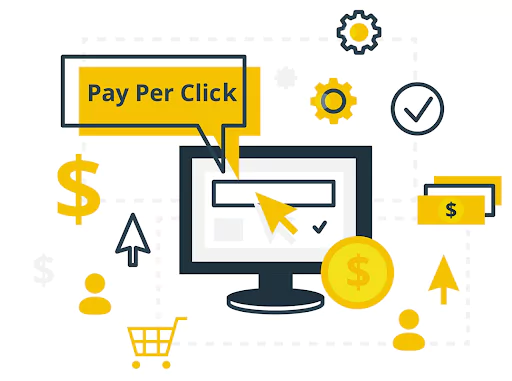
PPC marketing works by placing ads in front of the target audience who is searching for keywords related to the advertiser’s business or product. The advertiser sets a budget and bids on keywords, and their ads will appear when the user searches for those keywords. When a user clicks on the ad, the advertiser pays a fee (the cost per click, or CPC) to the publisher, typically a search engine or social media platform.
The success of a PPC campaign is determined by various factors, including the relevance and the quality of the ad copy and the landing page, the target placement of the ads, the bid amount, and the competition for the keyword. Businesses can track the performance of their PPC campaign through metrics such as click-through rate (CTR), conversation rate, and cost per conversation.
PPC marketing can be an effective way for business to reach their target audience, generate leads, and drive traffic to the website. However, it is important to understand the mechanics of PPC advertising and to continuously refine and optimize campaigns to ensure the maximum return on investment.
The Example of PPC
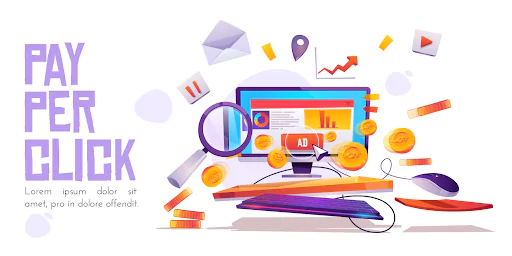
A common example of PPC advertising is when businesses place a search ad on Google. The business choose keyword related to its product or services and set a budget for the campaign. When a user searches for one of the keywords, the business’s ad appears at the top or bottom of the search results page. If the user clicks on the ad, the business pays the fee to Google. The cost per click (CPC) is determined by factors such as the bid amount, relevance, the quality of the ad, and the competition for the keyword.
For example, a local florist may bid on the keyword “flower delivery” and have an ad that appears when a user searches for “flower delivery near me”. The ad might include a call-to-action (CTA) to “Order now” and a description of the florist services, such as “Same-day delivery available”. If the user clicks on the ad, they are taken to the florist’s website where they can place an order for the flower delivery. The florist plays a fee to Google each time their ad is clicked.
Why PPC Important for Marketing
PPC advertising is important for marketing for several reasons:
- Reach Target Audience
Allows businesses to reach a specific target audience based on keywords, geographic location, and other demographic factors. This help to ensure that the right people see the business’s ads are relevant to the target group.
- Cost Effective
PPC is a cost-effective way to drive traffic to the website. The advertiser only pays when someone clicks on their ad, they are not paying for wasted impressions. Additionally, PPC advertising is flexible and can be adjusted based on the budget and goals of the campaign.
- Measurable and trackable
Provides detailed data and insight into the performance of campaigns. Advertisers can track metrics such as Click-through-Rate (CTR), conversation rate, and cost per conversation to optimize their campaign and ensure a high return on investment.
- Quick results
Offers quick results compared to other marketing strategies. Ads can be live within a few days, and the result of the campaign can be seen within a short frame.
- Complementary to other marketing strategies
It can be used to complement other marketing strategies, such as SEO and content marketing. PPC advertising can drive immediate traffic to the website, while SEO and content marketing work to drive long-term traffic
How to Create an Effective PPC Campaign
To create an effective PPC campaign, follow the steps:
- Define your target audience: Determine who you want to reach with your PPC campaign by considering factors such as demographics, interests, and geographic location. This will help you identify the keyword to target and create ads that will resonate with the right customers.
- Choose the best-fit keyword: Select keywords that are relevant to your business. Use keyword research tools to identify popular keywords and determine the cost per click for each keyword.
- Write compelling copy: Create ads that are clear, concise, and attention-grabbing. Make sure your ads highlight the benefit of your product or services and include a call to action.
- Choose the right landing page: Select a landing page that is relevant to your ad and provides a seamless user experience. The landing page should be optimized for conversation
- Set a budget: Determine how much you are willing to spend on your PPC campaign and allocate your budget accordingly. Set a daily budget and a maximum cost per click to ensure that your company stays within your budget.
- Monitor and adjust: Monitor the performance of your PPC campaign regularly and adjust as needed. Analyze metrics such as click-through rate (CTR), conversation rate, and cost per conversation to identify areas for improvement and optimize your campaign.
- Test and refine: Continuously test and refine your PPC campaign to ensure its effectiveness. Experiment with different ad copy, keywords, and landing pages to see what is best for the target customers.
By following these steps, you can definitely create an effective PPC campaign that reaches your target market, attract visitors to your website, and generate lead and conversations for your business.
Final Though
To recap, with the right approach and tools of PPC marketing, you only pay when someone interacts with your ad, making it an effective way to assist businesses to reach their brand mission and cause a huge success for their website. From choosing the perfect text and refine in the form of keywords to mixing them into beautiful compositions with compelling ad copy, PPC marketing is an ever-involving canvas waiting for you to create your masterpiece. So why wait? Start your PPC journey today and bring your brand to life in front of the eyes that matter most.
————————————————————————————————————–
Article by – Yes Web Design Studio
For more information…
Instagram: yeswebdesign_bkk
Twitter: yeswebdesignbkk
PPC Marketing in 2026: How AI Is Transforming Paid Advertising
The PPC landscape has changed dramatically since this article was first published. In 2026, artificial intelligence plays a central role in how paid advertising campaigns are created, managed, and optimized. Understanding these changes is essential for any business that wants to get the best return on their ad spend.
AI-Powered Campaign Management
Platforms like Google Ads and Meta Ads now rely heavily on AI-driven automation for bidding, audience targeting, and ad placement. Google’s Performance Max campaigns, for example, use machine learning to automatically distribute your budget across Search, Display, YouTube, Gmail, and Maps — optimizing for conversions in real time. While this reduces the manual work involved, it also means advertisers need to focus more on providing high-quality creative assets and clear conversion signals rather than micromanaging individual keywords.
The Rise of AI-Generated Ad Creative
AI tools can now generate ad copy, headlines, and even visual creatives based on your product data and brand guidelines. Google Ads and Meta both offer built-in generative AI features that create multiple ad variations for testing. However, the most successful campaigns still combine AI-generated options with human-crafted messaging that reflects your brand’s unique voice and value proposition.
Privacy Changes and First-Party Data
With the continued phase-out of third-party cookies and stricter privacy regulations globally, PPC strategies in 2026 depend heavily on first-party data. Businesses that collect and organize their own customer data — through email lists, CRM systems, and on-site engagement tracking — have a significant advantage. Platforms reward advertisers who upload quality customer lists for lookalike targeting and conversion optimization.
Rising Costs and the Need for Landing Page Optimization
Average cost-per-click (CPC) rates have continued to rise across most industries, making it more important than ever to maximize the value of each click. This is where landing page optimization becomes critical. A well-designed, fast-loading landing page with a clear call-to-action can dramatically improve conversion rates, lowering your effective cost per acquisition even as CPCs increase. At Yes Web Design Studio, we specialize in building high-converting landing pages that are purpose-built for paid advertising campaigns — ensuring your ad budget delivers real results.
The bottom line: PPC remains one of the most powerful digital marketing channels in 2026, but success now requires a smarter, more integrated approach that combines AI automation with strong creative strategy and optimized web design.
You Might Also Like
- Easy Lead Gaining Techniques on Facebook
- Exceed Email Management with CRM Software
- The Latest Web Design Trend and How to Stay Ahead of the Curve
Looking for a professional web design agency in Bangkok? Yes Web Design Studio delivers custom websites, SEO, and digital marketing for brands across Thailand. Get a free consultation today.