

Chatbots AI has revolutionized the way businesses interact with their customers. They provide a convenient and efficient way to answer frequently asked questions, assist with transactions, and even perform complex tasks. However, not all chatbots are created equal. While some are simple programs that respond to specific keywords, others use Artificial Intelligence (AI) to understand and respond to user inputs in a more human-like manner.
In this comparison, we will explore the differences between normal chatbots and chatbot AI, and how they are used in various industries. From understanding how they are built and analyzing each type of chatbot, Yes! web design Studio will help you comprehend which one is the best fit for your business.
Normal Chatbots
A normal chatbot is a computer program that is designed to simulate human conversation through text or voice interactions. It is typically programmed to respond to specific keywords or phrases and is often used in customer service or support settings to help users find the information they need. The chatbot uses a set of predefined rules and responses that are programmed into it. When a user inputs a message, the chatbot compares it to its set of predefined rules and responds with the corresponding answer.
The technology is often used in industries such as e-commerce, customer service, and support to provide quick and efficient assistance to customers. For example, an e-commerce chatbots can help users navigate through the website, find products, and complete transactions. A customer service chatbot can help users troubleshoot problems and answer frequently asked questions.
They are relatively easy to set up and can be integrated into different platforms such as websites, mobile apps, and messaging platforms. They are also relatively inexpensive to maintain and can handle a large volume of interactions simultaneously. However, they do have limitations as they can only respond based on pre-programmed rules and cannot understand natural language inputs.
Chatbots AI
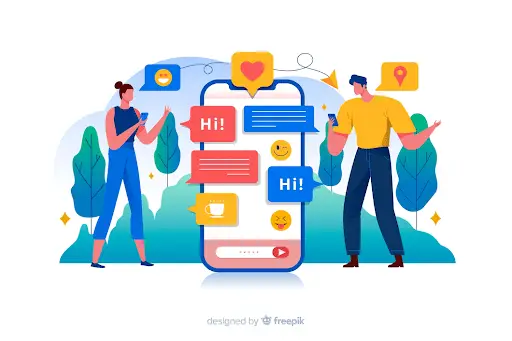
Chatbot AI, or artificial intelligence chatbot, on the other hand, is a more advanced version of a normal chatbot. It uses advanced algorithms and machine learning techniques to understand and respond to user inputs in a more natural and human-like manner. It can also learn and adapt over time, becoming more accurate and efficient in its responses. This type of chatbot is often used in more complex settings, such as financial services or healthcare, where a more sophisticated level of conversation is required.
The system uses natural language processing (NLP) and machine learning algorithms to understand the intent behind user inputs. It can interpret natural language inputs such as questions, statements, and commands and respond with appropriate answers. It can also be trained on a large dataset of interactions to understand different types of inputs and provide more accurate responses.
They can be integrated into various platforms such as websites, mobile apps, and messaging platforms, and can handle a large volume of interactions simultaneously. They can also be trained to handle a wide range of tasks, from answering frequently asked questions to perform complex transactions.
The main difference between a normal chatbot vs a chatbot AI
Overall, the main difference between a normal chatbot and a chatbot AI is the level of intelligence and understanding of natural language. While normal chatbots are limited in their abilities, chatbot AI is able to understand the context and intent behind a user’s query and respond in a more human-like manner.
AI-powered chatbots provide a more advanced and personalized experience for users compared to normal chatbots. They can handle a wider range of queries, understand context and intent, and improve over time. Therefore, AI-powered chatbots are more sophisticated and efficient than normal chatbots.
————————————————————————————————————–
Article by – Yes Web Design Studio
For more information…
Facebook: yeswebdesignstudio
Instagram: yeswebdesign_bkk
Twitter: yeswebdesignbkk
The Chatbot Landscape in 2026: Is the Distinction Still Relevant?
When this article was first written, the difference between rule-based chatbots and AI chatbots was quite clear. Rule-based bots followed scripts, while AI chatbots used natural language processing to understand intent. In 2026, this line has blurred significantly — and the choice for businesses has become more nuanced.
The Rise of Hybrid Chatbot Solutions
Most modern chatbot platforms now offer hybrid solutions that combine the reliability of rule-based flows with the flexibility of AI conversation. For example, a chatbot might use a structured decision tree for common transactions (like booking an appointment or checking order status) but switch to AI-powered free conversation when the user asks an unexpected question. This hybrid approach gives businesses the best of both worlds — predictable, error-free handling of routine tasks with the ability to engage in natural dialogue when needed.
AI Chatbots Are Now Affordable for Small Businesses
One of the biggest changes since this article was first published is the dramatic drop in cost for AI-powered chatbots. In 2023, deploying a sophisticated AI chatbot required significant investment in development and API costs. By 2026, platforms like Tidio, Intercom, and Chatbase offer AI chatbot builders with monthly plans starting under $30, making the technology accessible even to small businesses and startups. Many of these platforms include pre-built templates for common industries — including web design, e-commerce, real estate, and professional services.
Key Factors to Consider When Choosing in 2026
While the technology has advanced, the fundamental decision still comes down to your business needs:
- Volume of inquiries: If your business handles hundreds of customer messages per day across multiple channels, an AI chatbot will handle the variety of questions far better than a scripted bot.
- Complexity of conversations: For simple, linear interactions (e.g., “track my order”), a rule-based flow may still be the most efficient option. For complex, multi-turn conversations (e.g., “I need help choosing the right web design package for my restaurant”), AI is essential.
- Language requirements: AI chatbots in 2026 support dozens of languages fluently, making them ideal for businesses operating in multilingual markets like Thailand, where customers may switch between Thai and English within the same conversation.
- Integration needs: Modern AI chatbots integrate directly with CRM systems, email marketing platforms, payment gateways, and calendar apps — turning your chatbot into a fully functional business assistant rather than just a FAQ responder.
Our Recommendation
For most businesses in 2026, the answer is AI — specifically, a hybrid AI chatbot that combines structured flows for critical business processes with AI-powered conversation for everything else. The cost barrier that once made AI chatbots impractical for small businesses no longer exists, and the benefits in terms of customer satisfaction, lead capture, and operational efficiency are substantial.
At Yes Web Design Studio, we integrate smart chatbot solutions into the websites we build, ensuring they are configured to match your brand voice, business goals, and customer expectations. Whether you need a simple lead capture bot or a full AI-powered customer service assistant, we can help you find and implement the right solution.